Actualités
16 April 2026

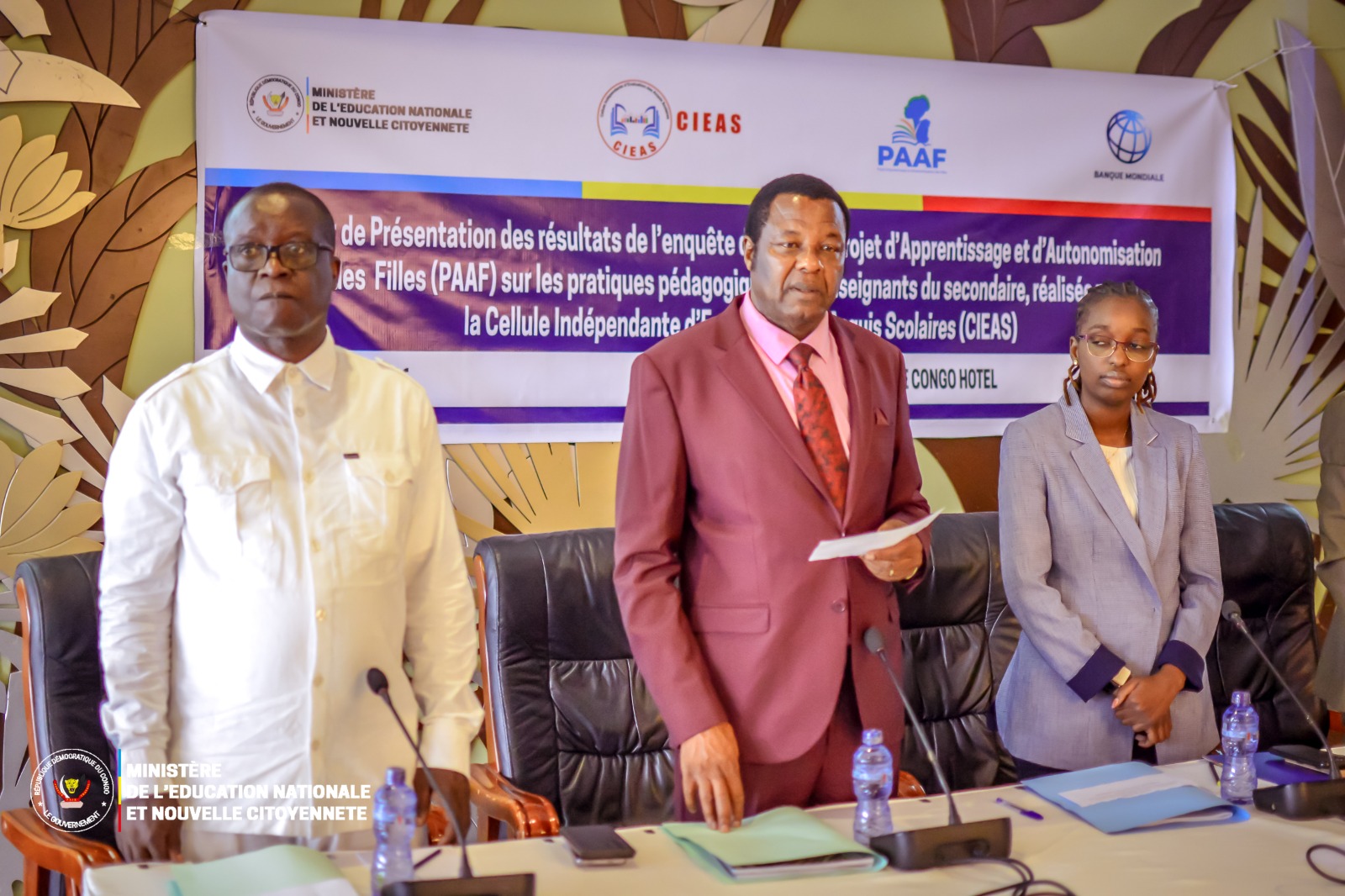
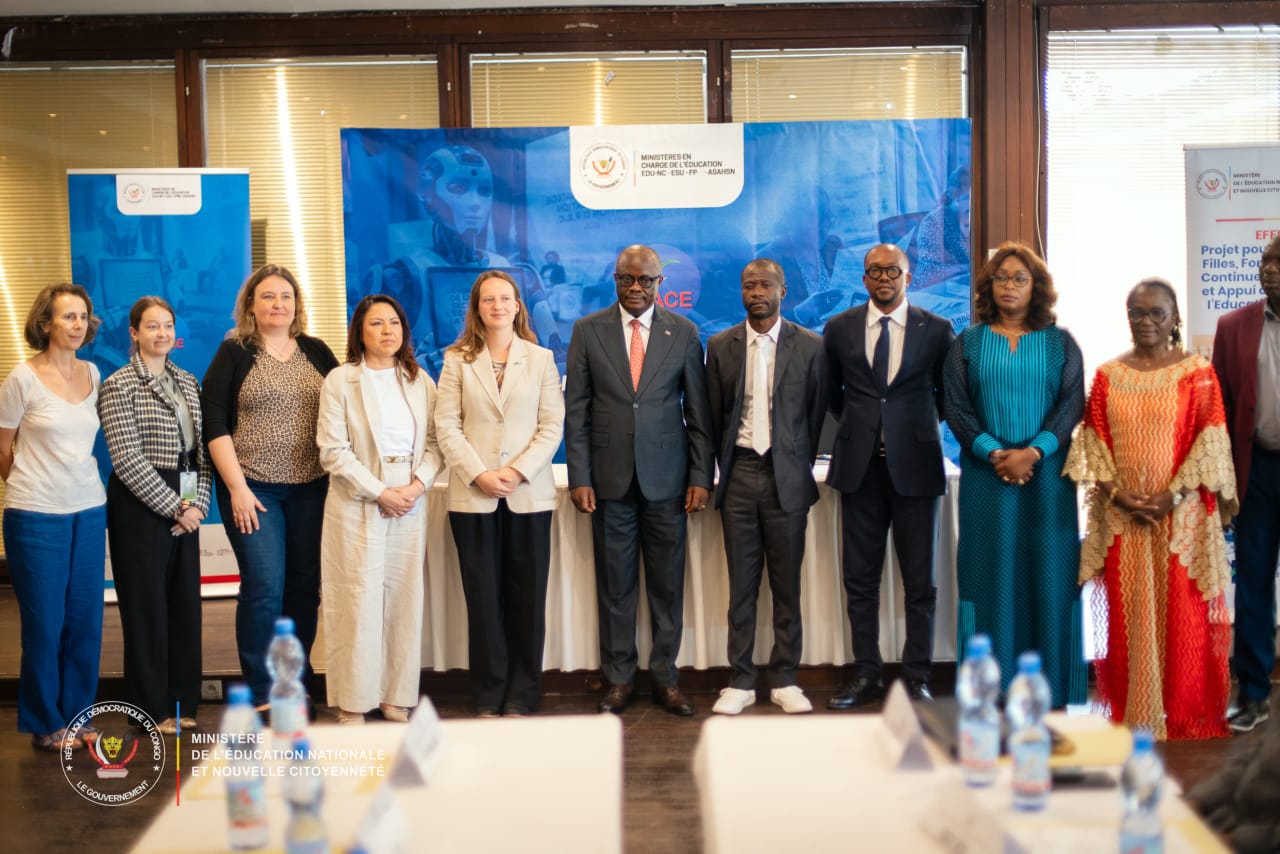
On Thursday, April 9, 2026, the Independent Unit for the Assessment of Academic Achievement (CIEAS) released the results of its survey on the teaching practices of post-primary school teachers.
The findings were presented in Kinshasa following an in-depth assessment conducted in 2025 with support from the Girls’ Learning and Empowerment Project (PAAF), funded by the World Bank.
Titled “TEACH Secondary,” this study is part of an effort to improve the quality of education in the Democratic Republic of the Congo. It highlights the pedagogical dynamics observed in classrooms through a structured analysis of teaching practices.
In total, 855 teachers were observed by specially trained researchers, covering 425 schools—60% in urban areas and 40% in rural areas. The study involved 5,880 secondary school teachers—24% women and 76% men—as well as 39,530 students, with 53% girls and 47% boys. The average class size is estimated at 46 students.
Teaching practices still in need of improvement
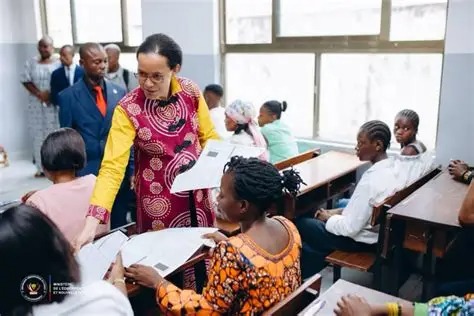
The survey results reveal that teachers have a moderate ability to create a supportive learning environment. To some extent, they are able to set positive behavioral expectations, lead lessons, and check students’ understanding.
However, significant weaknesses were identified. Teachers face greater difficulties in providing constructive feedback on students’ misunderstandings and successes, as well as in developing their critical thinking skills.
The study also highlights limited effectiveness in promoting learner autonomy. Teachers are less inclined to offer students choices, encourage their perseverance, and foster collaboration in the classroom.
Toward an active, learner-centered pedagogy
Speaking at the event, Laurence Kabasele, Deputy Director of the Office of the Minister of State for National Education, reiterated the importance of a profound transformation of the Congolese education system. She emphasized the need to move beyond the traditional model based on the mere transmission of knowledge.
“We can no longer be content with teaching based on the mechanical transmission of knowledge. Our education system must evolve toward an active, inclusive, and learner-centered pedagogy,” she stated.
For his part, the Inspector General of National Education, Hubert Kimbonza Sefu, highlighted the strategic significance of this survey. According to him, these results constitute a valuable decision-making tool for guiding educational policies, particularly regarding continuing teacher education and pedagogical support.
A catalyst for education system reform
The work resulting from this workshop is part of a collective reflection process aimed at proposing concrete actions to improve the quality of education in the DRC. The stated ambition is to offer students an education adapted to contemporary demands and focused on their overall development.
This initiative aligns with the second strategic pillar of the Ministry of National Education’s five-year plan, dedicated to improving the quality of learning. It notably includes a revision of school curricula to integrate key 21st-century skills, such as critical thinking, problem-solving, creativity, and collaboration.
It should be noted that traditional subjects will also be enriched by emerging themes, notably information technology, sustainable development, and citizenship education, with the aim of better preparing students for today’s challenges.
Nodriche Kasaï & Célestin Zeula
Filter by structure or document type to find the right content.

For any report or information related to national education and new citizenship, call 178