Actualités
16 April 2026

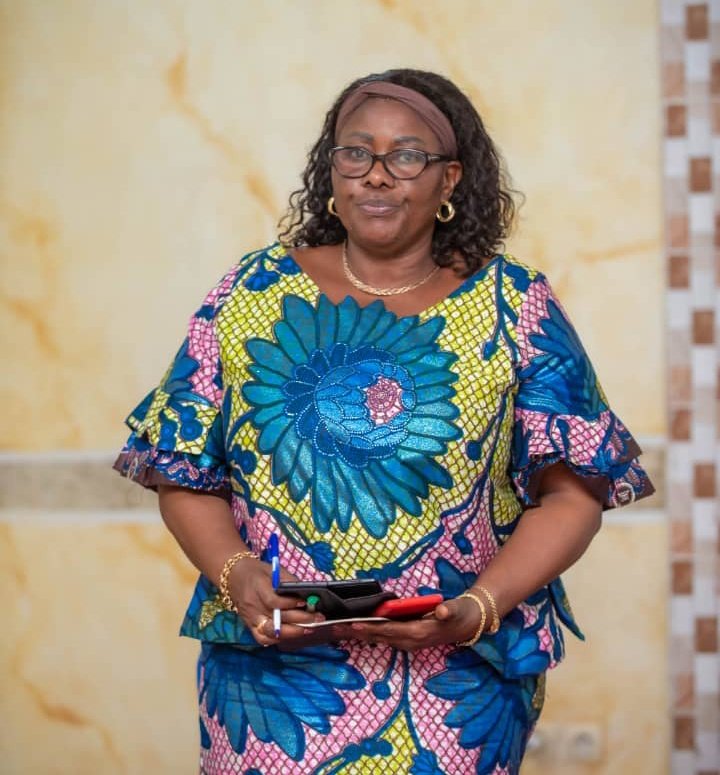
As part of Women’s Month, the Communications Management Directorate of the Ministry of Primary, Secondary, and Technical Education (DGC-EPST) is highlighting inspiring women in this subsector.
First and foremost, the spotlight is on the head of administration for this sub-sector, Christine Nepa Nepa, the first woman in over four decades to hold the position of Secretary General at the Ministry of EPST.
With an extraordinary career path, Christine Nepa Nepa, former head of the Department of Education for Daily Life (DEVC), was appointed to the rank and position of Secretary General in 2018 by presidential decree.
This followed her outstanding success in the competitive examination organized at the time by the Congolese government. This examination was a first in the Democratic Republic of the Congo, and she was among the 9 successful candidates out of the 72 ranked in order of merit.
She was appointed acting Secretary General by Minister Tony Mwaba Kazadi before being confirmed by Deputy Prime Minister for the Civil Service Jean-Pierre Lihau, Secretary General of the Ministry of EPST, after exactly 17 months in the acting role, from May 18, 2021, to November 18, 2022.
“At the time of my confirmation, I praised God for restoring my rights,” she emphasized.
Her Beginnings at the EPST
This woman, however, began at the entry-level rank of first-class office clerk, brought to the EPST by her paternal uncle.
“Like an adventure, I embarked on my professional life at the EPST. I started as a civil servant at the rank of first-class office clerk, not by my own choice but by that of my paternal uncle. Now deceased, he served as secretary-general at FORCADRE, then in the Civil Service, and later in parliament. That is how I advanced under the guidance of various supervisors I had until I became office chief, division chief, director-head of department, and today, secretary-general,” recounts the current secretary-general at the EPST.
She urges women and girls to work hard and persevere because, she asserts, if we want to end poverty in the world, we must invest in women.

Balancing a professional career with motherhood and grandparenthood
Christine Nepa Nepa believes that women must use the education they receive to increase their presence in the labor market, diversify their schedules beyond household chores and family care, and make an impact within their communities.
Indeed, today they make up more than 40% of the global workforce and a significant proportion of entrepreneurs and farmers worldwide.
“Fortunately, I no longer have any minor children. My children are all adults and responsible. Nevertheless, as a mother, I remain available to my children, drawing on my experience to help them make good decisions. I offer advice and set them straight when necessary. I’m also a grandmother; my only regret is having such a busy schedule that I can’t spend as much time with my grandchildren as I’d like... I make up for it on weekends, holidays, and during festive seasons,” said Christine Nepa Nepa.
However, this iron lady, mother of three daughters, feels proud of the female role model she has been in the eyes of her children, who have always looked up to her and have grown into responsible and independent women today.
She even confides that her eldest daughter already has her own small business “that’s doing wonderfully.”
“In turn, she is also a role model within the family,” she said.
Society has every interest in empowering women
The world has been celebrating International Women’s Day since March 8, as usual.
This year, the day is being celebrated under the theme “Toward an Inclusive Digital World: Innovation and Technology for Gender Equality.”
In the DRC, the central theme of all Women’s Month activities is: “Equal digital education for peace and the empowerment of women and girls in the DRC.”
For this woman who has risen through the ranks at the EPST, society has every interest in working—women and men alike—toward women’s empowerment.
“As in other parts of the world, we must recognize women’s empowerment as an essential factor in economic development. As we know, access to education for girls and women creates economic opportunities. It is therefore illusory to think that without working toward gender equality we will succeed in achieving the development of our beloved and beautiful country,” notes this chief administrator.
She added, “Society has every interest in empowering its women. This should naturally be the responsibility of every person, man and woman, who wants to see our society achieve great things. For an empowered woman is productive. And the more people there are who produce goods or services, the better the country’s economy fares, and this will inevitably have positive impacts on social peace and so many other issues. And by taking on high-level positions, these women also help develop policies that benefit women and girls."
Gaelle Basubi Ngole
Filter by structure or document type to find the right content.



For any report or information related to national education and new citizenship, call 178