Actualités
16 April 2026
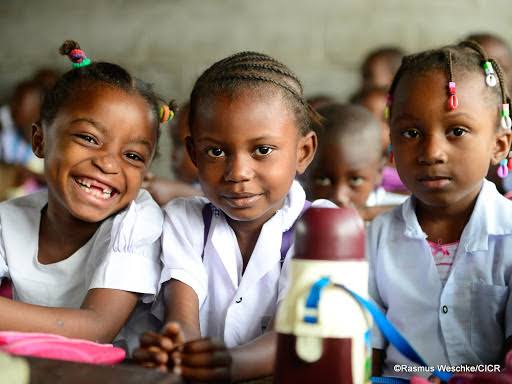
The Sectoral Strategy for Education and Training (SSEF 2016–2025) states that the stages leading to a successful educational journey are preschool, elementary school, and secondary school.
Education experts estimate that two out of three students who have followed the standard curriculum as organized by the Congolese government have a more fulfilling educational journey and adapt easily to adult life.
This is particularly true of Jean-Paul Yawidi Mayinzambi, a professor of psychology specializing in school-adjustment issues at the National Pedagogical University (UPN).
In his book *Accompagnons l’enfant à réaliser un parcours scolaire* (Helping Children Succeed in School), the psychologist asserts that since the school’s mission and purpose is to qualitatively transform children for their adult lives, every stage as organized within the Congolese educational system contributes to this goal.
*Preschool: The First Step*
Preschool is not a daycare center, as many parents believe.
It is a stage of education aimed at fostering the child’s personal development through sensory, motor, and social education.
It also helps awaken the child’s intellectual abilities, in harmony with their family, social, and environmental context.
The purpose of preschool is to prepare the child for the next level: elementary school.
It therefore prepares them for reading, writing, communication, counting, and arithmetic.
Preschool also prepares children to embrace human values such as tolerance and living together.
“It helps children learn to tolerate others without being swayed by them, and to accept differences and divergences,” says this doctor of education.
This is why Jean-Paul Yawidi is convinced that “every learner is reborn by attending school.”
*Elementary School for Writing, Reading, Counting, Calculating, and Communicating*
For the author, primary school, for its part, has the mission of helping “children acquire a knowledge-oriented basic education: writing, reading, counting, calculating, and communicating.”
It lasts six years and provides children with a general education that enables them to integrate meaningfully into society by adopting behaviors and attitudes that reflect the awakening and development of their intellectual, moral, and physical faculties.
“Primary school is an important stage for children, marking their true discovery of the laws of life and social relationships,” writes this specialist.
*Secondary School or Early Career Choice*
According to the law governing education in the DRC, the secondary level includes general secondary education, general humanities, and technical and vocational humanities.
Its purpose is to equip students with general and specific knowledge to enable them to understand elements of national and international cultural heritage.
The mission of secondary education is to develop students’ critical thinking, creativity, and intellectual curiosity and to prepare them either for a trade or profession, or for higher education and/or university studies if they express an interest and possess the aptitude.
The aforementioned psychologist believes that this stage offers adolescents entering it a core curriculum before they embark on specific academic tracks.
It is in this sense that he highlights the crucial role of a guidance counselor at this level of education.
“They can help students understand their aptitudes, abilities, preferences, ambitions, and interests. They will provide them with objective information about the educational opportunities available to them. They raise awareness of the real needs of the region and the country… while respecting the student’s choice.”
In conclusion, we can therefore note that school helps develop certain habits that enable children to adequately cope with the social realities they will face in their adult lives.
As a reminder, the government of the Democratic Republic of the Congo (DRC) organizes the education sector into several subsectors, including Higher and University Education (ESU) and Primary, Secondary, and Technical Education (EPST).
According to Framework Law No. 14/004 of February 11, 2014, on the Organization of National Education, the EPST sub-sector also includes preschool education.
The Sectoral Strategy for Education and Training (SSEF 2016–2025), adopted by the government in 2016, implements several reforms.
In the EPST, these reforms address access to educational institutions for all school-age children, improving the quality of education, and promoting good governance.
Thierry Mbebangu
Filter by structure or document type to find the right content.
For any report or information related to national education and new citizenship, call 178