A step-by-step school pathway from early childhood to higher education
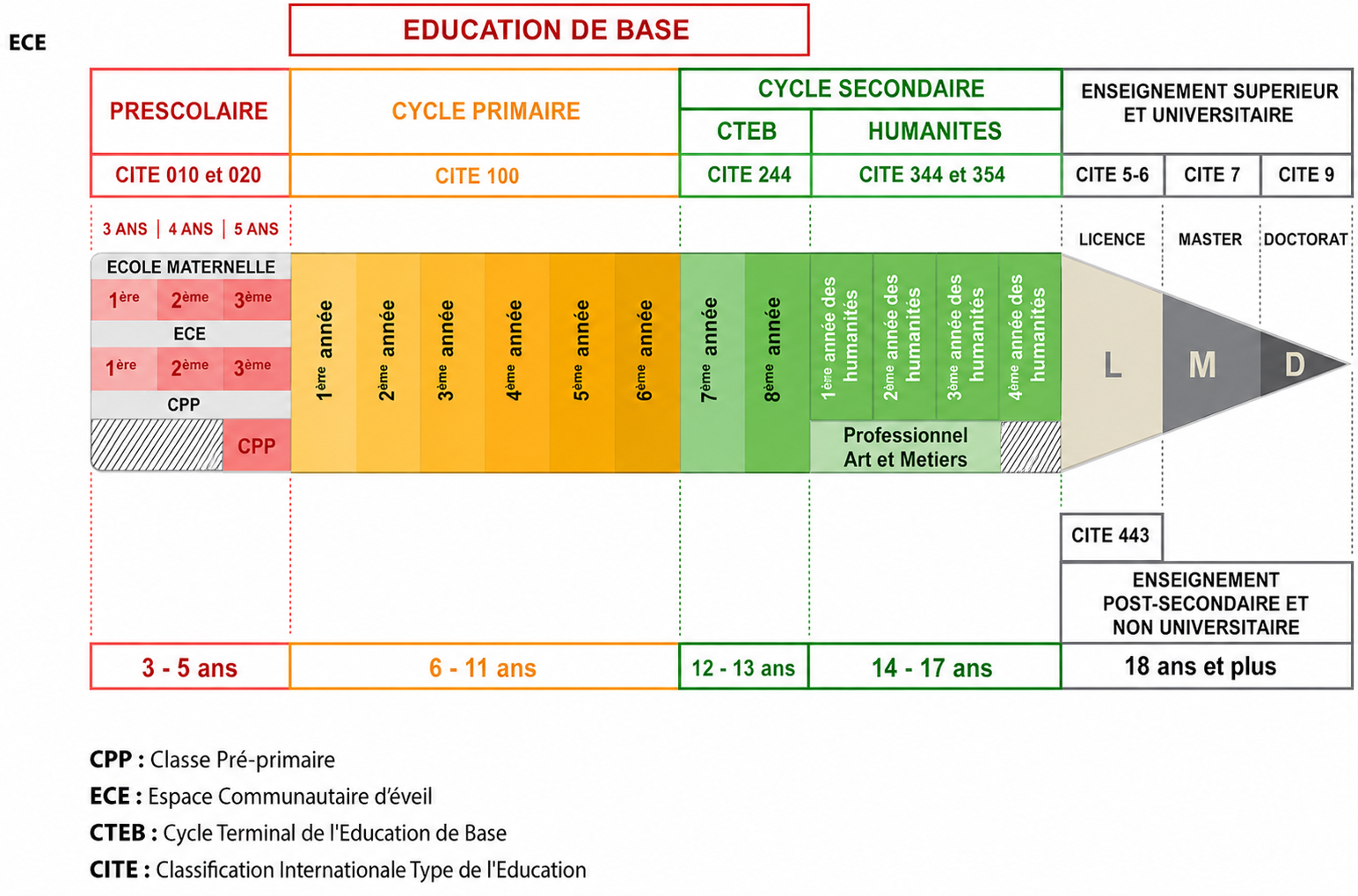
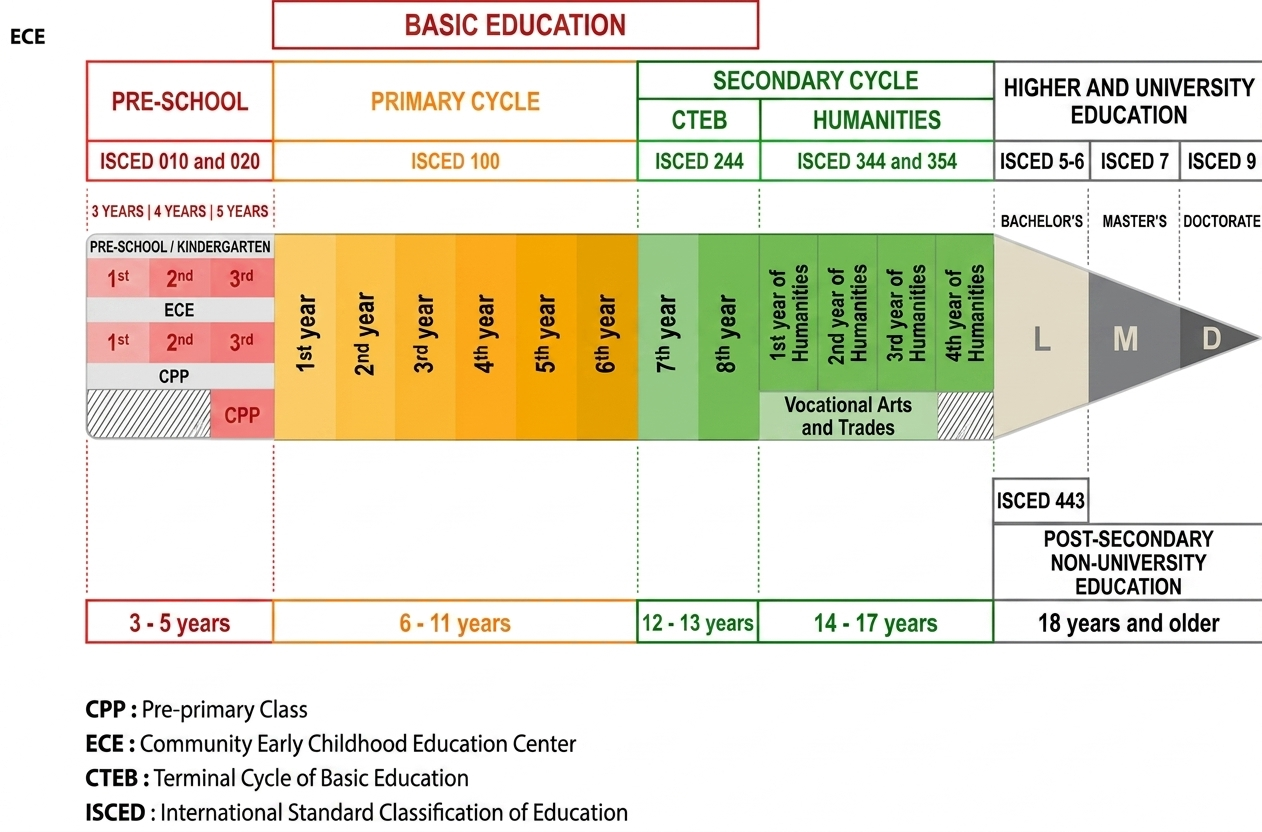
The education system in the Democratic Republic of the Congo is organised progressively to ensure a continuous, structured, inclusive pathway from early childhood to higher education. The Ministry of National Education and New Citizenship organises preschool, primary, and secondary education.
Preschool education is the first stage of the system. It serves children under 6 and usually spans three years: 1st, 2nd and 3rd year of preschool.
This level focuses on awakening, socialisation, psychomotor development, and early cognitive and social skills, preparing children for basic education.
Basic education is compulsory and is the foundation of schooling in the DRC. It lasts eight years and is organised in two cycles:
It lasts six years (grades 1 to 6) for children aged 6 to 11. It aims to build core learning: reading, writing, mathematics, sciences, civic and moral education.
It lasts two years (7th and 8th years), usually for learners aged 12 to 13. It consolidates primary learning and prepares pupils for upper secondary (humanities).
Secondary education, commonly called Humanities, serves pupils aged 14 to 17 after basic education. It is organised in three distinct streams:
Focused on in-depth academic and theoretical training (scientific, literary, pedagogical, etc.), mainly preparing for higher education.
Focused on applied technological training, combining general and technical subjects, for qualified professional entry or further technical higher education.
Focused on practical skills and trades. They last three years, compared with four years for general and technical humanities, and primarily aim at direct entry into the labour market.
Higher education is open to holders of the State diploma. It mainly serves learners aged 18 and over and follows the LMD structure (Bachelor’s, Master’s, Doctorate):
This level trains senior staff, develops scientific research, and produces knowledge for national development.

For any report or information related to national education and new citizenship, call 178